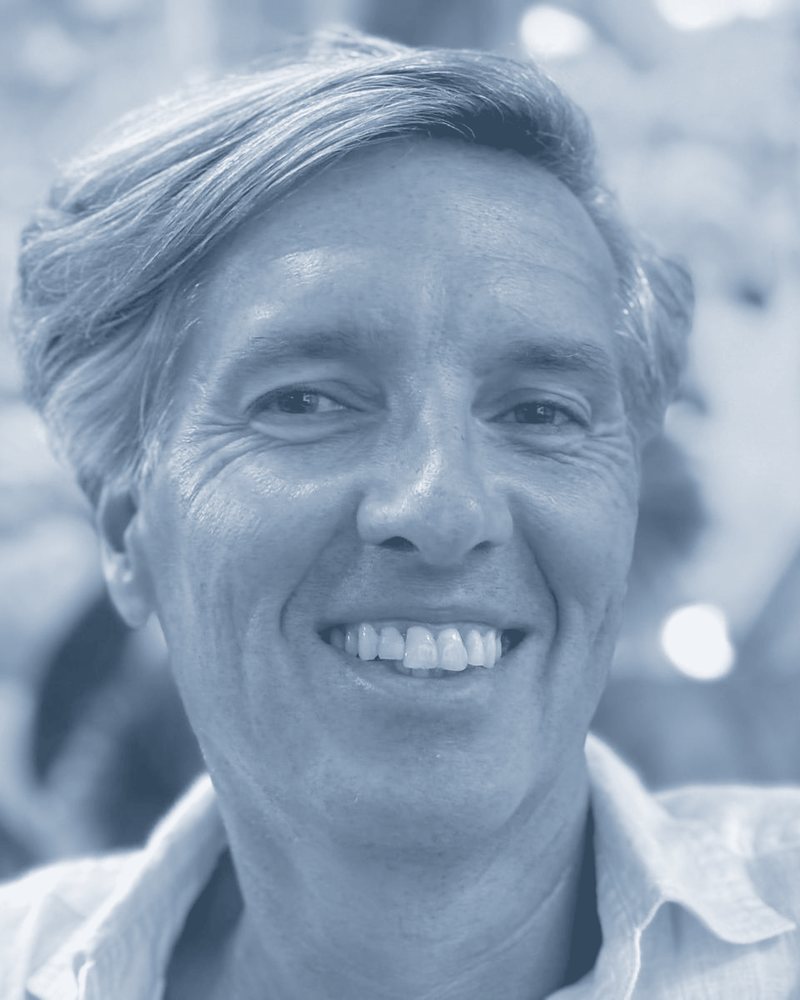
Attorney. Advocate.Working on reconstruction.
I’m a D.C. lawyer and an Arlington civic organizer, working on one problem. When people can’t see how their government decides things, and can’t move it when it gets things wrong, they stop believing it belongs to them. Some of them will vote for whoever promises to break it. My work is making democratic institutions legible and responsive enough that breaking them never looks like the best option again.
What that means in practice
Accountable
Taking notes and names. Rebuilding trust starts with an honest reckoning about what failed, and consequences for those who helped break our government. Trust can’t be rebuilt on institutions we’re still pretending worked.
Legible
Government that shows its work, so people can see how decisions get made, who made them, and how to push back.
Responsive
Closing the gap between what institutions promise and what actually gets built, funded, and fixed, on a timeline people can feel.
Owned
Showing people the real on-ramps (national service, local boards, school communities) where they learn the system is theirs to change, because they’ve changed it.
The rot in America’s institutions runs deeper than any one politician, and we won’t fix it by defending what’s broken. The job is building institutions worth the loyalty we ask people to give them.
When the damage stops, we’ll need a Second Reconstruction, one that fixes what actually broke.
The record
Most of what I’ve done has been this work, under other names.
Owned · national service
In 1993, at seventeen, I served with Hands On Atlanta in the Summer of Service demonstration project. From 1994 to 1997, as a program coordinator for the Georgia Commission for National and Community Service, I helped stand up AmeriCorps in Georgia at the very beginning. I oversaw thirteen of its national service programs and worked the seams between local agencies, nonprofits, and private partners. It was ground-floor work on a new institution built on a plain idea: that we belong to our communities, we owe them real work, and we have the power to change them.
Legible · the law
I’ve practiced communications and media law since 2000, and started my own practice in 2006. At bottom the job is translation: making an opaque federal agency legible to the people it governs. I’ve represented spectrum users before the FCC and the D.C. Circuit, advised television and radio owners on affiliation and station deals, and guided broadcast acquisitions from Europe to Latin America.
Responsive · streets and schools
I spent years pushing local government to build what it had already promised. I led the region’s largest cycling-advocacy organization, the Washington Area Bicyclist Association, as a board member (2011–2019) and its president (2013–2019); served on the Arlington Bicycle Advisory Committee (2010–2022) and the Virginia Bicycling Federation board (2014–2018); and I’m a director of the Bicycle Helmet Safety Institute. Most recently I was president of my kids’ elementary school PTA (2024–2026), where the work was making a school system answer to every family in it.
Legible · a long-held view
In 2007 I wrote that government “could be substantially improved with increased transparency and honest communication between citizens and their representatives,” and I spent time in the early civic-tech community at TransparencyCamp and TransportationCamp. I still believe it, with more urgency than I did then.
Why I care
I’ve spent my whole life thinking about what it means to be a citizen.
I grew up a military kid, moving every few years: Arizona, Minnesota, Hawaiʻi, New Jersey, West Germany, Georgia, the United Kingdom, and points between. My father is British, and I carry a British passport alongside my American one.
I was a kid in West Germany while the Wall still stood, close enough to understand what it means to live next to a state that can stop you and demand your papers. Growing up partly abroad meant I never got to take America for granted. I had to decide what it meant to me. I’m still deciding, and still choosing it.
These days the question has faces on it. I’m married and the father of three, and much of my civic work started as any parent’s question: can my kids get to school safely, and will their school do right by every kid in it? When I’ve written to the County Board, I’ve signed on their behalf. The older I get, the more my motivation comes from them and their whole generation.
I write
I’m entirely too online. I’ve kept a blog since the late ’90s, more than two thousand posts of it, and have had letters published in the New York Times and the Wall Street Journal. Feel free to dig up the Twitter, TikTok, and, heck, even MySpace years.
I’ve also worked as a cycling journalist and photographer, publishing as Quo Vadimus Media, and for years wrote a weekly music column tracing songs back through their covers to their roots. It’s the same instinct as everything else here: follow a thing back to where it came from. These days the camera mostly points at everyday life around DC, on Instagram.
New here? A few good places to start:
- My America — on coming home, and an earned kind of patriotism (1998)
- Police State: Keeping You Scared — on fear, surveillance, and the reflexes of a free society (2008)
- Pathlete Dreams — from the cycling column (2011)
Off the clock
I’m a person, too. Among the things I’m still not good at: diving off an actual diving board, racing Flying Scots with SCOW, and dancing as well as I’d like. Among the things I’m still chasing: a little more depth as a freediver on a single breath, the running pace I used to have, and maybe one last Shenandoah Mountain 100.
Working together
Institutions don’t erode on their own. They erode when decent people decide it isn’t their job to insist. I’d rather insist, and I’d rather not do it alone.
I’m not looking for a job. I’m looking for good company: civic-tech groups, democracy and good-government organizations, and new projects trying to make public institutions work in public. I bring more than thirty years of this work: a lawyer’s command of regulation, licensing, and how organizations get built; an organizer’s sense of how to actually move a government; and a writer’s habit of explaining things plainly. That might look like advising, board service, legal counsel, writing, or helping start something that doesn’t exist yet.
If you’re working on this, I’d like to hear from you.
Get in touchmb@blacknell.net
“America the ideal — the one everyone was cheering for that day, the one they recognized before I did — that’s mine. It’s theirs, too. And goddammit it’s yours if you want it. Don’t treat that as anything less than what that is.”
— “My America,” blacknell.net, 1998